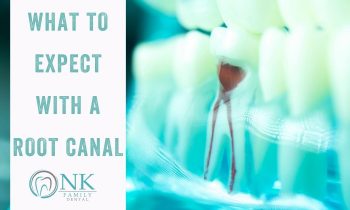
What to Expect with a Root Canal

Just hearing the words “root canal” may be enough to trigger a sense of pain. No matter whether you’ve had a less-than-positive experience with a root canal or know others who have, this common dental procedure is not as stressful as it may seem when performed by a skilled and experienced dentist or endodontist. From medical advancements in root canal treatment to improved training of endodontists over the years, getting a root canal has become a routine procedure resulting in lasting relief.

Has your dentist recently recommended a root canal procedure? NK Family Dental is here to provide answers to your questions and ease your anxieties. Keep reading to learn more about the outdated bad reputation of root canals, how to prepare for a root canal, what to expect during a root canal procedure, and root canal aftercare steps!

Handling the Bad Reputation of Root Canals

A root canal is generally performed when a tooth develops a root canal infection, which develops either as decay spreads to the inner pulp of the root or when a bacterial infection develops inside the tooth or at its root tip. Signs of a root canal infection include severe toothache, tooth sensitivity to both hot and cold temperatures, swollen and tender gums, and the development of abscesses on the gums. Root canal procedures - also known as endodontic therapy - stop infection and pain while preserving the tooth to prevent extraction. Once treated, the tooth retains its function and appearance. 

Not so long ago, a root canal was a lengthy, uncomfortable procedure that sometimes necessitated two visits to the endodontist. Today, when performed by an endodontist equipped with up-to-date technology, a root canal is a quick, painless procedure that - depending upon your individual situation - may be performed during a single appointment. If you have a bad memory of a root canal many years ago, be assured that there is no reason to dread undergoing one now!

The American Association of Endodontists (AAE) reported on a 2019 study by the University of Adelaide on modern root canal treatment, authored by Dr. Tallen Chew and published in the Journal Endodontics (JOE). The JOE study concluded that root canal treatments are currently perceived as no worse than other dental procedures, with more than 25 million root canals treated every year by dentists and endodontists.

So, what exactly is an endodontist? An endodontist is a dentist who specializes in diagnosing tooth pain, treating it performing root canal treatment. Endodontists must receive two or more years of advanced training after completing dental school in order to further develop their knowledge, skills, and use of advanced root canal treatment technology. You can rest assured knowing your root canal treatment is in qualified and experienced hands.

As Dr. Keith V. Krell, President of the AAE stated, “Modern root canal treatment helps save patients’ teeth, and no one is better equipped or trained to help a patient than an endodontist. Have no fear!”

Preparing for a Root Canal

While dental pain is often associated with a root canal infection and the necessity to undergo root canal treatment, some patients may not feel pain related to the infection if the tooth nerve has died. However, your dentist will be the one to decide whether you need a root canal in order to stop the infection - also known as irreversible pulpitis - and prevent tooth loss.

There are certain tests your dentist or endodontist may perform to confirm that a root canal is an appropriate treatment. Common diagnostic procedures include X-rays, a cone-beam CT (CBCT), and a pulp vitality test. Most pulp tests involve placing a cold stimulus on the tooth to check for a healthy response. 

Patients may be prescribed antibiotics prior to treatment if they are immune-compromised, or have one of the following conditions:

It’s important to be prepared and know what to expect before arriving at your appointment. This can help ease some of your anxieties, as well as give you an opportunity to ask your dentist or endodontist any questions you may have about the procedure.

Some questions you may want to ask before to consenting to root canal treatment include:

While you want to be sure a root canal is an appropriate treatment, the risk of infection if left untreated is extremely serious. If your dentist recommends having a root canal, you should proceed, or schedule an appointment for extraction. Doing nothing could pose a risk to your life as the infection eventually spreads throughout your body.

Tooth Anatomy Ask A Dentist

Anatomy of a tooth from Ask the Dentist

What to Expect During the Root Canal

So, what about the root canal procedure itself? There are seven core steps to root canal treatment. Knowing the steps will help you be more aware of what is happening during the procedure, especially for knowing when it’s almost over. The best news is that you will not feel any pain during the procedure itself, and you may not even feel anything at all! As is the case with most dental and medical procedures, however, you can expect some minor soreness and pain during the recovery process (more on that next).


Here are the primary steps of a root canal procedure:

  1. Another physical exam and set of X-rays - While your endodontist or dentist already conducted a physical exam and took X-rays, doing so once more just before the procedure helps ensure all the correct necessary preparations have been made.
  2. Oral numbing - Local anesthesia will be used to numb the infected tooth and the area around it. Sedation is not a requirement for root canals, but you may be able to request it from your dentist prior to the procedure to help with anxiety. You can read more about sedation on our blog post, “What to Expect with IV Sedation.”
  3. Rubber dam placement - To prevent further bacteria from reaching the tooth, a rubber dam (typically a latex sheet), will be placed over your mouth. Medications used inside the tooth will also be prevented by the dam from being swallowed.
  4. Tooth opening - Your dentist or endodontist will then drill open the top of the tooth.
  5. Removal, cleaning, and shaping — The infected pulp is finally removed using very precise tools, followed by the interior of the tooth being cleaned out and shaped.
  6. Tooth irrigation - The now-empty pulp chambers are then irrigated with water. This may also be followed by an antibacterial agent.
  7. Filling and sealing - Once the interior of the tooth is dry, the tooth will be filled and sealed. The filling is generally a combination of gutta-percha and rubber cement, although posts can also be included as needed. You will also receive a temporary filling to top the tooth until you later receive a permanent crown.

Root Canal Aftercare

Expect to go back to the dentist one to four weeks after your root canal procedure to receive a filling or get an impression for a crown. The tooth will need a crown because it is no longer “alive,” and therefore will soon become brittle and prone to breaking. A crown will provide a strong structure as durable as that of the tooth itself before the root canal procedure.

It’s important to be thorough in your root canal treatment aftercare, as directed by your dentist or endodontist. Some mild soreness and sensitivity in your tooth can be expected for several days following root canal treatment. To aid with this, your dentist may recommend rinsing your mouth with warm saltwater and/or taking over-the-counter pain medication. More serious pain and pain lasting longer than a few days could indicate something more abnormal, such as root canal failure, and you should contact your dentist immediately.

Caring for your mouth after a root canal procedure also includes consuming soft foods, avoiding very hot or cold food items/beverages, avoiding hard and sticky foods, avoiding alcohol, and not chewing or biting with the treated tooth until it has received a permanent crown. Of course, you will also want to resume brushing and flossing your teeth, being careful not to use too much force around the treated tooth when doing so. 

Finally, expect to see your dentist six months after your root canal procedure for a follow-up exam, followed by a check-up on the tooth every three to five years.

Stress-Free Root Canal

A root canal procedure should not be a stressful dental treatment, and NK Family Dental is committed to ensuring all treatment at our Chicago dental practice is always stress-free. From our spa-like facility to the care provided by our extremely skilled and trained dental staff, you will feel at home with us. We provide endodontic services including root canal treatment, as well as periodontal services and many other dental services.

If you believe you are experiencing the signs of a root canal infection or simply need to resume your semi-annual dental checkups, contact NK Family Dental today and make an appointment with us! We look forward to treating you and your smile.

How Can I Keep My Gums Healthy?

We often think about keeping our teeth healthy, as we all should. But, do you ever think about your gums? They may seem like the soft protection around your teeth roots, but keeping your gums healthy is vital to keeping your teeth and the rest of your body healthy. In other words, your gums are just one more example that oral health is overall health. Last month, we discussed what can be done about receding gums. This month, we’re taking a look at how to detect gum disease, how to keep your gums healthy and what treatment options are available.

Signs of Gum Disease

Gum disease, also known as periodontal disease, is not something that shows up overnight. Developing gum disease is a slow process, starting with gingivitis and progressing to advanced periodontitis, with many potential contributing factors. Essentially, gum disease is an infection in your gums caused by the buildup of plaque and bacteria, which can then lead to gum recession, damage to the bone supporting your teeth and tooth loss. Gum disease has additionally been linked to an increased risk for heart disease and low birth weights in newborns.

According to the American Dental Association (ADA), signs of gum disease may include:


You may be at a higher risk for developing gum disease if you:


If you are experiencing one or any of the signs of gum disease, it’s important to see a dentist or a periodontist as soon as possible to discuss your condition and treatment options. It’s also important to remember that you may not even experience any pain during the early stage of gum disease, so pay close attention to the other signs your mouth may be giving you that it’s time to see the dentist.

Read more about what a periodontist does and the signs of periodontal disease in our other blog post, “Signs You Need a Periodontist.”

How Can I Get My Gums Back on Track?

Making an appointment with an experienced dentist or periodontist is the first step to getting your gums back on track if you have any signs of gum disease. There, you can discuss and receive treatment. However, preventative action is the best step of all when it comes to keeping gum disease at bay. Everyone can and should improve gum health, whether or not you are experiencing signs of gum disease, through oral hygiene and other routine practices.

The core of improving gum health and preventing gum disease is by thoroughly brushing your teeth and your gums twice a day in order to remove plaque and bad bacteria. Be sure to follow these steps for brushing:


Other ways you can keep your gums healthy include:


Are Periodontal Diseases Reversible?

Yes, but it really depends on the stage of your gum disease and how you classify “reversible.” Gingivitis and early gum disease can usually be reversed by going to your dentist for cleanings and keeping up with a thorough oral hygiene routine. However, more advanced periodontitis will require more extensive treatments, which can treat and stop further gum disease, but may not be able to save damage already done. It all depends on your individual case, which is why it’s important to see an experienced periodontist for treatment.

As for some periodontal treatment options, we discussed the following treatments for gum recession in our blog post, “Can Anything Be Done about Receding Gums?”:


Periodontal surgery will likely be required for very advanced cases in order to rebuild your gums and protect your teeth and bone from further decay. After treatment, keeping up your gum health will largely be up to you through your daily oral care routine and sticking to your regular dentist appointments.

Your Gums Deserve the Best

Only a periodontist, a dentist who specializes in periodontics (the study and treatment of gums and supporting bones), can provide the best treatment. NK Family Dental is honored to have periodontist Dr. Waeil Elmisalati as one of our practicing partners. Not only is Dr. Waeil extensively trained and experienced in the field of periodontics, but he is also rated by patients as the #1 periodontist in Chicago on RateMDs.com! To schedule your next dentist or periodontist appointment with NK Family Dental, call us today or book online with ZocDoc.

Is Flossing Really Necessary?

We’re all told by our dentist that we need to floss daily, but how many of us actually keep up with flossing? Every day? For a few weeks after seeing the dentist? A few days? Not at all? More of us may stick to a daily flossing regimen if we really knew the benefits and the best flossing techniques. Since oral health affects your overall health, it’s important to maintain a good oral hygiene routine, which includes flossing. Let’s take a look at the full benefits of flossing your teeth, the best times to floss, and what your alternate options may be! 

The Benefits of Flossing

If you brush your teeth twice a day, why should you need to floss? Your teeth are clean, right? Unfortunately, brushing teeth, while still important, does not get your teeth completely clean. Flossing is an extra step to make sure that the spaces under your gums and between your teeth are also clean. 

But, do you really need to floss every day?

Yes! Flossing has many benefits for your teeth and gums, especially when it comes to removing plaque and preventing plaque buildup. What’s the issue with plaque? If left untreated, plaque can lead to tartar, a hard substance that only your dentist can remove. Left untreated, tartar can lead to gingivitis, progressing to periodontal disease. Untreated periodontal disease can lead to serious health issues, such as heart disease. It can also lead to tooth decay, tooth loss and bone loss.

Other benefits of flossing include:


Of course, flossing your teeth is only effective if it’s done properly. Follow these steps to make sure the spaces in between your teeth and your gums get a thorough cleaning:

  1. Select your preferred floss (waxed, flavored, single-strand, etc.).
  2. Pull about 18 inches of floss.
  3. Wrap the ends of floss around your index or middle fingers on both hands.
  4. Guide the floss between your teeth.
  5. Around each tooth, curve your floss angle and gently rub the floss up and down.
  6. Use a new section of the floss strand between each tooth.
  7. Use your floss to clean behind your very back teeth.
  8. Thoroughly rinse with mouthwash or water.


The Best Times to Floss Your Teeth

The American Dental Association (ADA) recommends flossing on a daily basis. As for the best time to floss, there is some debate among dentists on this issue. At present, there isn’t a definitive answer as to when you should floss, so long as you do floss. There is a school of thought that recommends flossing after brushing, while another favors the opposite. Finishing with mouthwash is recommended for either approach, however. As for morning or night, some dentists have different preferences, but flossing (at least once) along with brushing your teeth (twice) is what matters the most for maintaining good oral health.

Are There Alternatives to Consider?

If flossing teeth is something you struggle to accomplish, whether by incorporating it into your routine or the dexterity aspect of traditional flossing itself, there are other dental tools available. However, using non-dental tools (e.g., fingernails, paper, cutlery, safety pins, hair) to dislodge food particles stuck in your teeth can actually be very harmful to your teeth and gums. Talk about your flossing needs with your dentist, who can recommend the best alternative options.

Some of these alternatives to floss may include:


Keep Up With Your Oral Care

Flossing every day is important for improving and maintaining your overall health, but the best step you can take for your oral health is to see your dentist for semi-annual check-ups and cleanings. Visiting your dentist ensures your teeth are clean and that your mouth is carefully monitored for all potential oral health conditions. It’s also a great time to ask your dentist questions!

For regular checkups and a wide range of other dental services, visit NK Family Dental in Chicago! Our professional staff, including Dr. Nilofer Khan and Dr. Waeil Elmisalati, have the training, experience and compassion to provide the best oral care. Book your next appointment with us today!

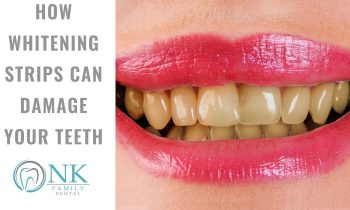
How Whitening Strips Can Damage Your Teeth

With the start of a new year, your resolutions may include improving your oral health and the appearance of your smile. Quick fixes like teeth whitening strips can seem like an appealing option for brightening your smile without having to visit the dentist, but are they really consequence-free? At-home whitening strips may provide an immediate solution to whitening your teeth, but the reality is that they can potentially cause damage to your teeth over time. 

Wearing Down Enamel

The main active ingredient in dental whitening strips is hydrogen peroxide. Hydrogen peroxide is also commonly used as a color-lightening agent to bleach hair, which can cause serious damage to your scalp and hair. When it comes to whitening your teeth, whitening strips containing hydrogen peroxide also pose potential threats to tooth enamel - the outer layer of your teeth. Behind the enamel is the dentin layer, followed by the inner layer containing connective tissue. The danger of hydrogen peroxide on teeth is that it can easily wear down your enamel and quickly move on to attacking the dentin.

How Whitening Strips Can Soften Teeth 

So, what is the problem with hydrogen peroxide in whitening strips reaching the dentin layer of your teeth? Once dentin is affected by the peroxide, you can expect a breakdown of the layer’s primary protein, collagen. This breakdown causes a fragmentation of the collagen and a loss of overall collagen mass. Research still needs to be conducted to determine if the body can regenerate or reverse the effects of lost collagen proteins once they have been exposed to hydrogen peroxide. The loss of collagen and softening of your teeth in the essential dentin can potentially cause your teeth to soften or become less hard, thus possibly leading to many other dental conditions.

Not Safe for Kids

When it comes to teeth whitening for kids and teens, it’s important to be cautious of whitening treatments, especially whitening strips. While low concentrations of hydrogen peroxide in whitening strips are generally safe for adults when used occasionally, it is uncertain if the same holds true for children, as very little research has been conducted. 

Other areas of concern include the increased likelihood of your child improperly following directions when using the strips - possibly resulting in your child keeping the strips on for too long (and therefore increasing risk of tooth damage) or accidentally swallowing the bleaching product. Many adults experience tooth sensitivity after teeth whitening, so keep in mind that your child could experience the same discomfort.

Because of the previously mentioned lack of research on the effects of whitening strips for children, the American Academy of Pediatric Dentistry (AAPD) claims that whitening strips are unsafe for children and teens under the age of 15. The best way to naturally improve the color of your child’s teeth are to help them avoid food and beverages that cause staining, along with ensuring your child brushes twice a day. If you have further concerns about the color of your child’s teeth, talk with his or her dentist about treatment options.

Professional Teeth Whitening

If you want to brighten your smile safely, talk to your dentist about in-office teeth whitening treatments. NK Family Dental provides safe, effective teeth whitening services for our Chicago patients, offering both the Zoom and Opalescence brands of teeth whitening treatments. Contact us today to schedule your teeth whitening treatment and other dental services.

How Painful Are Dental Implants?

Dental implants are a common procedure designed to improve the functionality of your teeth with artificial replacements. While they are similar to dentures or dental bridges, dental implants provide more comfortable and secure options for those who may not have enough remaining roots for damaged or lost teeth. All surgeries involve varying periods of discomfort during the recovery process, but improvements in oral surgeries like dental implants have greatly reduced the amount of pain and discomfort patients may experience. To help you prepare for the recovery process after receiving an implant, let’s take a closer look at why it may be the best restoration option, what to expect during the procedure and a general recovery timeline.

Why Dental Implants Are Performed

Dental implant procedures are performed in order to improve oral functionality as a result of tooth loss, damage, or decay. Titanium implants are inserted into the jawbone to replace and function as roots to the removed teeth. While dentures and bridges have the potential to cause bone damage, slip or make noise, implants stay secure and will not decay over time. Dental implants look and function just like natural, healthy teeth.

Candidates for dental implants should meet all or most of the following criteria:


What to Expect

Unlike many quick dental procedures, getting dental implants is a process that will take several months. This is why it’s especially important to be fully prepared and know what to expect during the recovery period. The good news is that the implant procedure itself should cause no pain, but the recovery process may involve some discomfort. Ask the Dentist lists and describes the six main steps of the dental implant journey.

  1. X-rays — Your dentist will take a set of x-rays for evaluative and prognostic purposes. X-rays, panoramic X-rays or a 3D CT scan will be used to determine bone and gum condition.

  2. Impressions - The next step will be for your dentist to make an impression of the inside of your mouth to be used for a replica model for further assessing treatment. Impressions are made by biting down on a U-shaped plastic or metal impression tray filled with soft liquid, which will then form into a rubber mold.

  3. Extractions - Before an implant can be performed, tooth extraction may be necessary if the problem tooth is still in place. Generally, extraction can be performed during the same procedure as a dental implant. You may feel a small amount of pressure or tugging during the extraction, but the anesthetic administered by your dentist will prevent pain.

  4. Implants - Finally, the implant procedure will begin. Once again, the anesthetic will prevent any pain during the procedure, although you may feel some slight pressure. Your dentist will first drill a hole in your jawbone and then place the implant deep within to act as solid root for the artificial tooth. Bone grafts (of either natural or synthetic material) may be necessary to ensure the jawbone is strong enough to secure the implant. After the implant comes a waiting period while your jawbone grows and attaches to the dental implant (known as osseointegration). This can take from several weeks to several months. In the meantime, a partial, temporary denture may be placed in the open space.

  5. Abutments - An abutment is a piece where the dental crown will be attached to the implant. Abutment placement will generally require a separate procedure once the jawbone as grown enough around the implant. While they can also be placed during the implant procedure, you may prefer to wait until the crown can be placed so that the abutment will not be visible while you wait for your bone to grow.

  6. Dental Crowns - The last step of a dental implant process is to receive your new permanent crown. More impressions may be made of your mouth to help mold a natural-looking tooth. Depending on your individual situation, you may be able to choose between removable crowns, fixed crowns or a combination of the two.


Of course, the best way to prepare for receiving dental implants is to discuss the process in detail with your dentist and his/her staff. It’s important to take notes, ask questions, request written informational material from your dentist’s office and talk to a previous dental implant patient from the same dentist, if possible.

Recovery Timeline

Recovering from dental implant procedures will be different for every patient. More implants will typically mean a longer recovery and increased post-procedure discomfort. There is a likelihood of some pain initially after receiving implants once the anesthetic wears off, but your dentist will provide prescriptions for medications and other post-procedure instructions on how to best manage any pain or discomfort.

While every patient experiences recovery in his or her own unique time, a general timeline of recovery after dental implants will look like the following:


The best way to minimize pain immediately following your procedure is to take medication as prescribed, closely follow any instructions from your dentist, use ice or a cooling pad to reduce swelling, rinse your mouth with warm salt water, consumer primarily cold and soft foods, and - most importantly - maintain good oral hygiene.

Any pain lasting longer than up to 10 days after dental implant surgery is cause for serious concern. Contact your dentist immediately if pain persists.

Chicago Dental Implants

Dental implants are an ideal treatment that helps improve your appearance, your ability to eat and enjoy a wide variety of food, and your overall confidence. Look no further than NK Family Dental for safe and reliable dental implant services in Chicago. Our founder and owner, Dr. Nilofer Khan and our partner periodontist, Dr. Waeil Elmisalati, both provide the highest-quality dental, orthodontic and periodontic care, backed by many years of education, certifications, and ongoing training. Learn more about our other dental services, including oral surgery and periodontics treatment. Then, contact us to schedule an appointment.


Use It or Lose It: Three Things You Need to Do to Get the Most Out of Your Dental Insurance

The end of the year is a time to reflect on all you have accomplished in the past 12 months and remember what you still have left to do - like use up your dental insurance benefits! Some dental insurance plans require you to use up your benefits throughout the year or risk losing them in the next. That’s why December is an excellent time to visit the dentist. While we previously discussed what to do if you don’t have dental insurance, today we’re taking a look at how to get the most out of your dental insurance benefits.

Know Your Benefits

How do you know if you have “use it or lose it” insurance benefits? Get the most out of your dental insurance plan by gathering information on your maximum benefits available (MBA) and your explanation of benefits (EOBs).

First, you will need to locate the full explanation of your dental benefits, whether online or on paper. Before looking over everything in your EOBs, search just for your MBA , which is the maximum amount of money your dental insurance will pay for a variety of dental work in the span of a year. Anything not used by the end of the year is lost and does not roll over. You’ve already paid for your insurance benefits, so you might as well use them!

Next, collect your EOBs sent from your dental insurance carrier after all of the dental work you have had performed over the year, and examine them in detail to see how much your dental insurance has paid to cover it. Totalling this amount and comparing it to your MBA will reveal how much is left that you can use towards dental work by the end of the year. EOBs and other insurance documents can often be confusing, however, so it can be useful to directly call your dental insurance carrier for assistance and to ask how much of your MBA is left.

Make the Most of Your Plan

So, it’s nearing the end of the year, and you want to make sure you get the most out of your dental insurance plan. What are the best ways to use your dental benefits so you don’t lose them? Consider these options:

  1. Visit your dentist for one of your semiannual dental appointments to receive a teeth cleaning and other preventive dental work. This is one of the easiest options to keep up your oral health and to take advantage of your dental benefits, as most insurance plans will completely cover preventive dental appointments. 
  2. Discuss dental plans for the remainder of the year at appointments in the summer or fall months, so you can plan and know what to expect. This helps ensure that there won’t be a scramble to use up your insurance benefits come December, along with everyone else. 
  3. Make sure you know what’s covered by your dental insurance and which treatments are not covered. This will help you determine how to effectively plan out your appointments for the rest of the year and into next year. Your dentist office should be able to provide information about what your insurance plan covers, but you can also directly call your insurance provider or visit their website to learn details. 

If you have a Flexible Spending Account (FSA) through your employer rather than dental insurance, the steps to take to get the most out of your plan are similar. Some FSA plans end on December 31, while others may extend a grace period to use the remaining amount left in your account or allow for a maximum carry over amount for the next year. Only put as much as you expect to spend through your FSA for dental work, discuss treatment coverage with your dentist and FSA administrator, and plan your dental appointments in advance.

Call and Schedule an Appointment

If you need to use up your dental insurance benefits by the end of the year, consider NK Family Dental for your top Chicago dentist and periodontist. See our list of accepted PPO insurance plans and other financing options, along with our many services. Then, call us to schedule your appointment ASAP before December 31! We look forward to treating you in this year and the year to come.

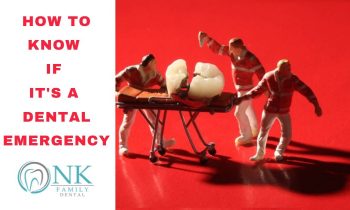
How to Know if it's a Dental Emergency

Unfortunately, good oral hygiene is not sufficient to keep the potential for dental emergencies at bay. Because everyone is susceptible to experiencing a dental emergency, it’s important to know your plan of action. Not all dental pain may necessitate an emergency visit, so here is a basic guide to help you determine when you should make that call to your dentist - either during office hours or after-hours.

What Is a Dental Emergency?

Dental emergencies vary in type, severity and treatment. According to Shawn Watson, writing for Verywell Health, they involve a high level of pain and impaired function to the teeth, mouth and/or jaw. In general, a situation is considered a dental emergency when a tooth has been lost due to injury (such as a sports-related injury) or is in immediate danger of being lost, as well as an abscess (infection around the tooth’s root or gum line).

Signs of a Dental Emergency

Because dental emergencies exist on a variable scale, it can be difficult to determine exactly what qualifies as a dental emergency. Very serious emergencies tend to apply to tooth fractures and infections. Conditions that are still urgent but may not be at the high level of severity as an emergency can include intermittent dull, low-level tooth pain and tooth sensitivity.

However, dental pain is one of the easiest-to-notice signs of a dental emergency. This pain can present as spontaneous, throbbing or even feel warm. It may spread to the cheek, temple or ear. Other dental pain may be severe and persistent - made worse by chewing or biting - and can lead to the development of an abscess. Left untreated, an abscessed tooth can turn into a serious, life-threatening condition.

Cracking, breaking, or suddenly losing a tooth due to injury can be considered dental emergencies. Should you lose a tooth because of injury, our January 23 blog post — “So You Lost a Tooth! How to Handle Accidental Tooth Loss” - provides instructions on what to do to improve the chance of the tooth being successfully re-implanted. 

You should call your dentist for an emergency appointment if you have:

When it comes to less severe matters like tooth sensitivity or minor discomfort, you should schedule a dental appointment as soon as possible. These signs may be indicators of loose fillings, minor tooth decay or a small amount of gum recession exposing parts of the tooth’s root surface.

Many types of dental emergencies can be prevented by wearing a properly fitting mouth-guard while participating in sports, not engaging in bad habits like chewing ice and — of course  - scheduling twice-yearly dental exams and cleanings. Your dentist will be able to detect and treat early signs of decay or other conditions before they have the opportunity to develop. 

Should You Go to the Hospital or the Dentist?

Some dental emergencies cross the line to a medical emergency that requires calling 911 or going to the nearest hospital’s emergency room. 

You should go to the hospital emergency room if you have:

What to Do if You Can't Reach the Dentist

Dental emergencies don’t always wait for a convenient time to occur during normal business hours. Your dental emergency may not be severe enough to go to the ER, but it might need to be treated ASAP by your dentist. Fortunately, many dentists provide patients with a phone number they can call for after-hours emergencies or for on-call substitute dentist recommendations.

If you are unable to see a dentist but are experiencing severe pain and need immediate treatment, go to your nearest healthcare facility. It is highly recommended that you make every attempt to see a dentist if your emergency is not life-threatening, as you will be financially responsible for all applicable ER and related medical fees.

Chicago Dental Emergencies

Contact us immediately for our NK Family Dental Emergency Exam if you are in the Chicago area and need emergency dental treatment for toothache relief, swollen jaw relief, sore gum relief, cracked tooth repair, repair of lost or loose fillings, root canal therapy or other types of dental treatment. Your emergency appointment with Dr. Nilofer Khan will include an examination to assess/diagnose your condition, digital x-rays of the affected area (if needed), and treatment.

If possible, call the NK Family Dental office before arriving, so we can be prepared to treat you quickly and effectively. For after-hours emergencies, please follow the instructions on our recorded phone message.


10 Things You Need to Know Before You Start Invisalign

Invisalign has become one of the most popular treatment options for cosmetic dentistry, especially for teens and adults. The clear aligners are discreet and can offer a more comfortable experience than traditional braces. However, Invisalign requires just as much care and attention as traditional braces in order to achieve the same winning smile. Learn the 10 most important facts about Invisalign treatment so your treatment will be successful and permanent.

Benefits of Invisalign

There are many benefits to Invisalign compared to traditional braces. One of the greatest benefits is that there is no upper age limit for Invisalign, so both teens and adults can opt for it. Of course, the clear aligners make the process of teeth straightening much more subtle. There are also no food restrictions for Invisalign wearers, compared to the lengthy list of taboo foods for those with metal braces. Soreness from teeth shifting may additionally be reduced by opting for Invisalign over traditional braces. Finally, while this is not a guaranteed benefit, Invisalign can potentially help with whitening your teeth, as the whitening agents in toothpaste after brushing will be compressed to your teeth when wearing the clear aligners.

How to Prepare

It’s important to know your options and be fully prepared before starting Invisalign treatment. While Invisalign offers many benefits and is less obvious than braces, not everyone is a candidate. Traditional braces will be required for more complex teeth and straightening concerns. As with any dental treatment, it’s important and necessary to talk with your dentist to decide the best plan of action for your needs. Remember that Invisalign is not an easier option simply because of the clear aligners, so be prepared to put as much effort into taking care of your teeth as traditional braces.

Top 10 Things You Need to Know Before You Start Invisalign

Now that you are more aware of the benefits and preparation steps, let’s look at some of the most important things you need to know about Invisalign before you start:

  1. You’ll be wearing your aligners the majority of every day. Just because they are clear doesn’t mean you can leave them off for long periods of time. Invisalign works best to straighten your smile when the aligners are worn as long as possible—a minimum of 22 hours a day. Keeping them in as much as possible will help you get used to the feel over time, as well.

  2. You may notice a small difference in your speech. While it likely won’t be that noticeable to anyone except yourself, you should expect to experience a slight lisp as you adjust to the aligners. This is likely to improve after the first day or two of wearing a new Invisalign set. The best way to adjust is to simply practice and speak with them on as much as you can.

  3. There is no set length of treatment. Because every person’s teeth are unique, the length of time to straighten them varies even with Invisalign. Adults can expect a year of treatment, on average, but your orthodontist or dentist will be able to provide a more accurate length according to your own needs. The best way to get Invisalign off as quickly as possible, though, is to be vigilant in your routine care and wear them the minimum 22 hours a day.

  4. You’ll frequently be brushing and flossing. After every time you eat, you will need to brush and floss your teeth, no matter what. Food particles getting caught between your teeth and the aligners can lead to irritation, pain, and even cavities. The pH of your mouth will additionally change when wearing Invisalign, so it’s essential to keep your mouth as clean as possible. The few extra minutes a day will be worth it.

  5. The aligners require extra care. It’s not just your teeth that you will need to make sure are clean. Invisalign aligners must be cleaned daily by brushing them just like your teeth. Once in the morning and once in the evening is recommended, but brushing them when you brush your teeth after meals can help keep them clean throughout the day. Soaking the aligners once a day can also help keep them cleaner and whiter.

  6. You can’t eat with the aligners on. Thankfully, there are no restrictions on what you can eat when they are off. The downside to this is the frequent brushing and flossing, as mentioned in #4. Eating with the aligners on can make taking care of them very difficult, so it’s important to always take them out before eating. Drinking water regularly with Invisalign treatment will also help keep your mouth hydrated and clean.

  7. You may need attachments. Invisalign provides a clear, almost unnoticeable experience. However, the straightening needs of your teeth may require a little extra assistance to catch up to speed with the rest of your teeth. Attachments, known as Invisalign buttons or brackets, are tooth-colored and blend right in to your teeth. They will only be attached to individual teeth that require them. With these potential attachments are likely to be clear rubber bands to help the treatment process.

  8. You will need to wear a retainer afterward. Just like with traditional braces, you will still need to wear a retainer every night once your Invisalign treatment is completed. A nightly retainer will help maintain the success of your straightened smile for years to come. Slacking on this step will cause your teeth to slowly start shifting back into misalignment.

  9. Your teeth may need extra work before starting Invisalign. This may depend on the size of your teeth and how well they will fit in with your aligner trays. In some cases, larger teeth may need to be slightly filed down in order to fit evenly. This routine procedure is not painful, and not everyone may need it done.

  10. Invisalign costs are variable. There is no way to give a precise estimate on the cost of Invisalign compared to traditional braces. Every person’s mouth and needs are different, after all. For some people, Invisalign may cost less than traditional braces. For others, the costs may be about the same. Your dental insurance provider may cover Invisalign treatment, as well. Your orthodontist or dental office will be able to provide you a more accurate quote for both Invisalign and braces.

Smile Freely Again

If you’re looking to regain confidence in your smile, look no further than Dr. Khan at NK Family Dental, your top-rated Bucktown dentist in the heart of Chicago. NK Family Dental provides a full range of dental, orthodontic and periodontal services, including both Invisalign and traditional braces. Contact us today to schedule your consultation.


WHAT TO EXPECT WHEN UNDERGOING INVISALIGN TREATMENT

Teenagers and adults alike seek orthodontic treatment to help them obtain a beautiful and healthy smile. Since the introduction of Invisalign, a more aesthetically pleasing alternative to metal braces, the number of people pursuing treatment has increased. Although popular and effective, Invisalign patients will have a different experience compared to those who opt for metal, or traditional braces. Keep reading to learn what to expect when undergoing Invisalign treatment, so that you will be adequately prepared.

Benefits of Invisalign

Most dental patients are initially drawn to Invisalign, as the aligner trays are less noticeable than metal braces. However there are other noteworthy benefits. The thin and clear shells work faster than metal braces, and are relatively pain-free. You will likely experience soreness as your teeth shift, but you will not experience tissue injury. Invisalign trays are also easy to remove and reinsert, meaning you can enjoy the foods that are restricted with metal braces. Finally, as the aligners are removable, cleaning both the trays and your teeth will be less of a hassle. With good oral hygiene habits, your teeth will be less susceptible to discoloration and cavities than with traditional braces.

Things You Should Know


At NK Family Dental, we are proud to offer Invisalign clear aligners for patients who want to experience the benefits of standard braces without metal or wires. Encounter the benefits of exceptional dental treatment and service by contacting us to schedule your appointment today. Our team of highly trained professionals will be glad to assess your unique dental situation in order to provide the best method of treatment possible to help you achieve the smile of your dreams.


How to Know if You Have TMJ Disorder

The traditional song Dem Bones relates in a highly simplified way how each bone of the human body is connected to the other. However, it left out the temporomandibular joint (TMJ), which connects the mandible – better known as the jaw bone – to the temporal bone, located on the sides of the skull. It’s the essential little joint that makes opening and closing your mouth possible.

Most of the time, for most people, the TMJ does its important job without calling attention to itself. Yet for some people, for a variety of reasons, it causes pain or discomfort. Learning some of the basics about TMJ disorder can help you have a more productive consultation with your dentist if you’re experiencing any of the common symptoms covered in this article.

What is TMJ disorder?

According to the National Institute of Dental and Craniofacial Research (NIDCR), TMJ disorder isn’t a single condition, but a group of conditions causing pain and dysfunction in the jaw joint and muscles that control jaw movement. The TMJ Association estimates that about 12 percent of people in the United States experience this disorder.

Researchers generally agree that TMJ disorders fall into three main categories:

  1. Myofascial pain – Involves discomfort or pain in the muscles that control jaw function.
  2. Internal derangement of the joint – Involves a displaced disc, dislocated jaw or injury to the condyle (the “hinge” of the mandible).
  3. Arthritis – A group of degenerative/inflammatory joint disorders.

What are the symptoms of TMJ disorder?

Any level of pain or tenderness in the jaw could indicate TMJ disorder – as well as if your jaw makes a clicking sound when you open and close your mouth, even if this is not painful. Facial pain is another common symptom, as is any limitation of jaw movement, or locking of the joint, making it difficult to open or close your mouth.

According to Mayo Clinic, other signs and symptoms of TMJ disorders may include:

TMJ Pain Area

 - Pain in one or both of the temporomandibular joints

 - Aching pain in and around the ear

 - Difficulty chewing or pain while chewing

 - Aching facial pain


What are the causes of TMJ disorder?

A number of factors can contribute to a TMJ disorder, including erosion of the disc between the ball and socket. The disc cushions the load while enabling the jaw to open widely and rotate or glide. Any problem that prevents this complex system of muscles, ligaments, discs and bones from working properly may result in a painful TMJ disorder.

Other causes include:

Talking with your dentist about TMJ disorder

A diagnosis by a dentist – preferably one with extensive experience in treating TMJ disorder – is necessary before treatment can begin. This is not a condition to attempt to diagnose or treat yourself, as TMJ disorder is complex and symptoms may indicate an underlying medical condition. NK Family Dental specializes in treating TMJ disorder. Please visit our TMJ disorder page to learn how we perform our examination, and the treatment options you may be offered, depending upon your particular situation.

A typical examination to diagnose TMJ involves includes checking the joints and muscles for tenderness, clicking, popping or difficulty moving. X-rays may be taken. If necessary, more extensive diagnostic tests can include a CT scan, MRI or a TMJ arthroscopy. Depending on the diagnosis, your dentist may refer you to a physician or another dentist who specializes in TMJ disorder.

After establishing a TMJ disorder diagnosis, your dentist or doctor will provide treatment options, which could include the following:

Surgery may be necessary for more critical cases. Common surgical procedures to treat TMJ disorder include arthrocentesis, TMJ arthroscopy and condylotomy.

If you suspect that you have TMJ disorder, schedule an appointment with us as soon as possible to relieve your pain and prevent further damage. Learn about our  start-of-the-art facility and relaxing environment, our other services and your payment options. Our informative blog provides the latest on such topics as how stress can affect your oral health. Contact us today.