Teeth bonding usually costs about $300 to $600 per tooth in the United States, though the final fee can be lower or higher. The total depends on how many teeth need treatment, how large or complex the repair is, local dental fees, and whether insurance views the procedure as restorative or cosmetic.
If you're weighing cosmetic options for chips, gaps, or discoloration, talking with a cosmetic dentistry team can clarify whether bonding is the right choice for your smile. NK Family Dental in Chicago, IL offers personalized recommendations and transparent cost estimates to help you compare options and feel confident in the plan.
Dental bonding, also called composite bonding, uses tooth-colored resin to repair or reshape a tooth. Dentists often use it for small chips, minor gaps, uneven edges, localized discoloration, or limited decay.
Most offices quote bonding per tooth. A small repair on one tooth may cost a few hundred dollars, while bonding several front teeth can raise the total into the thousands.
Ask whether the estimate includes the exam, X-rays, bite adjustment, polishing, and any follow-up care. These items are sometimes billed separately, especially if the dentist needs to check for decay, sensitivity, or damage under the surface.
See our guide: Is dental bonding right for you?.
The size and location of the repair can change the price. Rebuilding a larger part of a front tooth usually takes more time and material than smoothing a small edge.
Teeth exposed to heavier biting forces may also need more detailed shaping and bite adjustment. That extra time can increase the fee.
Other common cost factors include:
A low quote does not always reflect the full cost. Ask for a written treatment plan that lists each tooth, each procedure, and the expected fee.
Insurance may help cover bonding when it restores function or treats disease. That can include certain fractures or a cavity repair.
Insurance usually does not cover bonding done only to improve color, close a cosmetic gap, or change tooth shape. Coverage depends on your plan, and deductibles, annual maximums, waiting periods, and frequency limits may apply.
A dental office can send a pretreatment estimate, but only your insurer can confirm benefits. Even then, a pretreatment estimate is not a guarantee of payment.
If you plan to use benefits, review our guidance on dental insurance to help maximize coverage.
Flexible spending accounts and health savings accounts may sometimes be used for eligible restorative treatment. Purely cosmetic treatment may not qualify, so check your account rules before using those funds.
Bonding is often less expensive upfront than a porcelain veneer or crown, but these treatments are not interchangeable. The right option depends on how much healthy tooth structure remains, your bite, your cosmetic goals, and whether the tooth has decay or a deeper fracture.
For a closer comparison, read our guide on bonding vs. veneers.
Treatment | Typical Role | Relative Upfront Cost | Key Consideration |
|---|---|---|---|
Composite bonding | Small chips, gaps, shape changes, or limited decay | Lower | Conservative, but can stain or chip |
Cosmetic change to the visible front surface | Higher | Often more stain-resistant; usually requires some enamel removal | |
Dental crown | Covers and protects a substantially weakened tooth | Higher | More extensive preparation than bonding |
Orthodontic treatment | Moves teeth to correct spacing or alignment | Varies | Addresses tooth position rather than masking it |
A veneer or crown should not be chosen only because it may last longer. Those options usually require more tooth preparation, while bonding can often be placed with minimal enamel removal and may be reversible in limited cosmetic cases.
If longevity is part of your decision, learn how long porcelain veneers last.
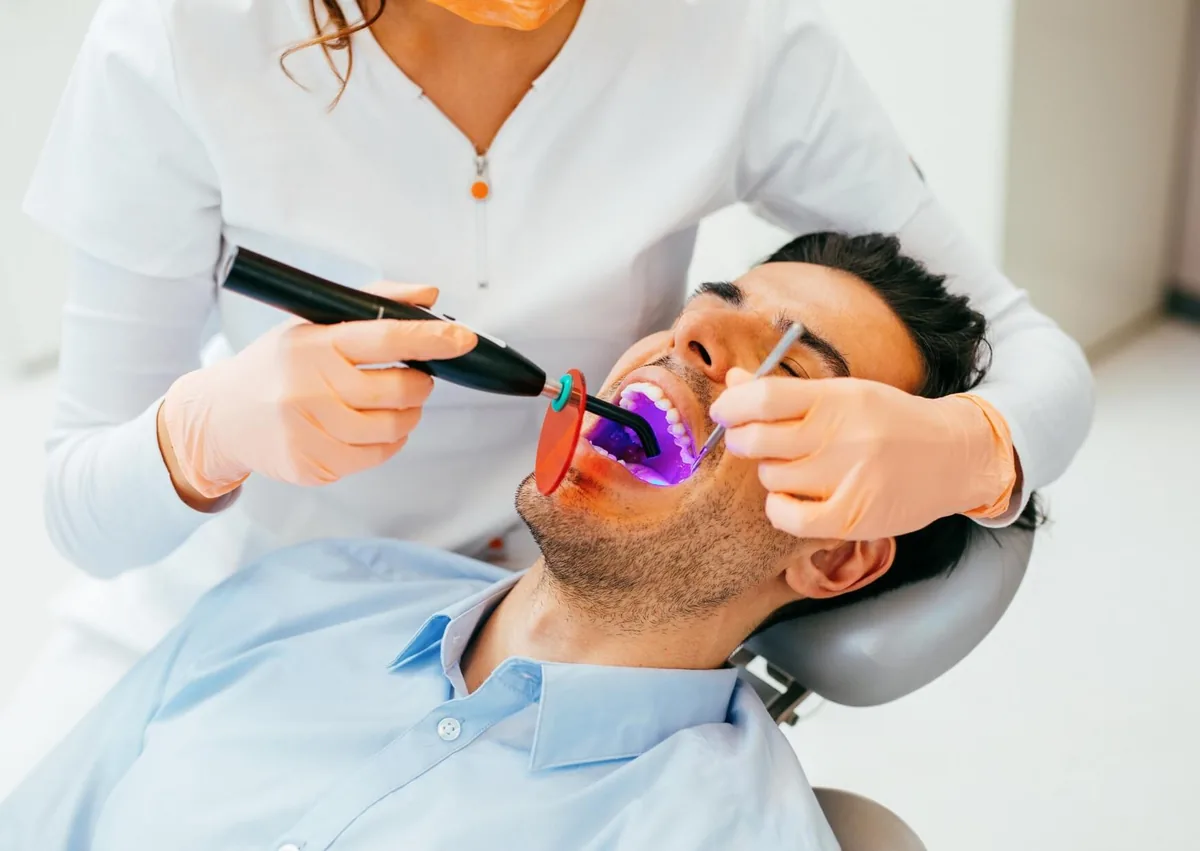
The dentist first matches the resin to your tooth shade. Then the tooth surface is prepared, an adhesive is applied, and the composite is shaped into place.
A curing light hardens the material. The dentist then trims, polishes, and checks your bite.
Many simple cosmetic bonding cases are completed in one visit. Some patients need little or no anesthesia, though numbing may be needed if the tooth has decay, sensitivity, or treatment near the gumline.
Bonded teeth should feel smooth and let your bite close comfortably. Mild short-term sensitivity can happen, but ongoing pain, a rough edge, or a bite that feels off should be checked.
Bonding often lasts several years, but the exact lifespan varies. Smaller repairs in lower-stress areas may last longer than larger repairs on teeth that take more biting force.
Composite resin can stain over time and is generally more likely to chip than porcelain. Habits like nail biting, chewing ice, or grinding can shorten its lifespan.
To help protect bonded teeth:
Coffee, tea, tobacco, and other dark pigments can stain resin. Bonding also does not whiten the way natural enamel can, so ask about whitening first if a lighter overall shade is part of your goal.
A dental exam is important because a chip, dark spot, or gap may have a cause that bonding alone will not fix. Decay, enamel erosion, gum disease, bite problems, or a deeper crack may need treatment first.
See your general dentistry provider if a tooth stays sensitive, keeps chipping, or changes color without a clear reason. A dentist can tell you whether bonding is appropriate and give you a personalized written estimate.
Get prompt dental care for worsening pain, swelling, fever, drainage, a loose tooth, or a fracture after an injury. Facial swelling that affects breathing or swallowing needs urgent medical attention.
To confirm whether bonding or another cosmetic option is best for your teeth, arrange a brief exam and written estimate so you know the expected steps and costs. Call NK Family Dental for cosmetic dentistry in Chicago, IL at (773) 249-4700 or book online to discuss same-day or next-available appointments.
Bonding is generally less expensive upfront than porcelain veneers. It may also require less removal of natural enamel, but it can stain or chip more easily and may need repair sooner.
Bonding can close some small gaps by adding resin to the neighboring teeth. Larger spaces or gaps caused by tooth position or bite problems may be better treated with orthodontics.
Cosmetic bonding on intact enamel is often comfortable and may not require anesthesia. If bonding is used to treat decay, sensitivity, or an injured tooth, local anesthetic may be needed.
In many cases, yes. A dentist can often add or replace composite resin without redoing the entire restoration, though repeated chipping may point to grinding, an uneven bite, or the need for a different treatment.
No. Bonding is not considered permanent, and it may eventually need polishing, repair, or replacement because of staining, wear, or fracture.
Please confirm you're not a robot to proceed to the secure payment page.